
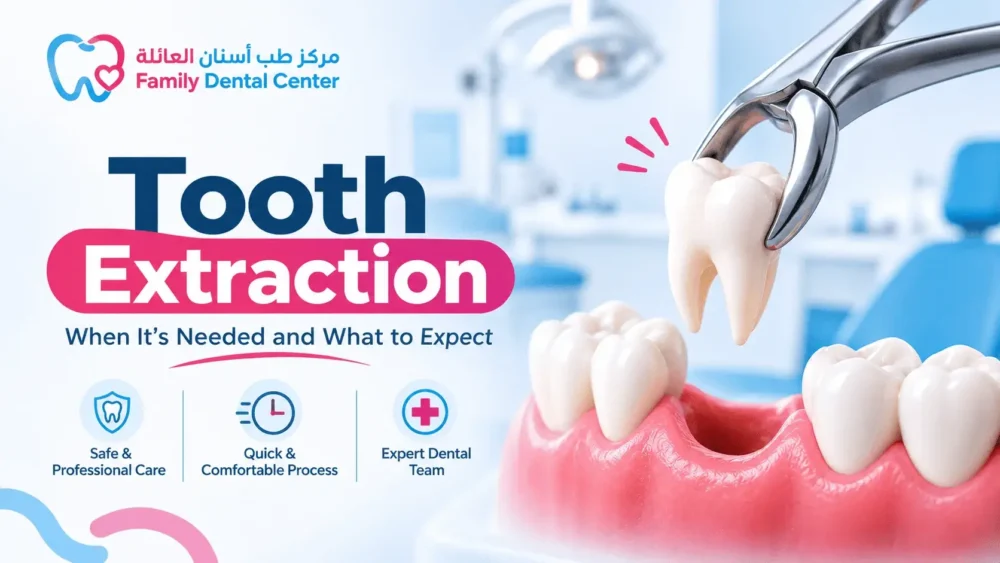
Tooth extraction is the removal of a tooth from its socket in the jawbone, and it is one of the most common dental procedures. Dentists recommend it when a tooth is too damaged, infected, or crowded to keep. This guide explains how the procedure works, what it costs in Oman, how long healing takes, and what to do at every stage of recovery, from food and bleeding to warning signs.
What Is a Tooth Extraction?
Tooth extraction meaning, in clinical terms, is the removal of a tooth that cannot be saved or that is harming the surrounding teeth, gum, or bone. Most procedures use local anaesthesia, so you feel pressure and movement but no sharp pain. A straightforward case on a single tooth typically takes 30 to 60 minutes, according to Cleveland Clinic.
How difficult the removal is depends on the tooth’s position, the number and shape of its roots, and the condition of the surrounding bone and gum. If you feel sharp pain at any point, tell the dentist straight away so they can add more anaesthetic.
Simple vs Surgical Tooth Extraction
A simple extraction applies to a tooth that is fully visible above the gum line. The dentist loosens it with an elevator and lifts it out with forceps.
A surgical tooth extraction is needed when the tooth has broken at the gum line, has not fully erupted, or has curved or multiple roots that make a straight pull risky. The dentist opens the gum, may remove a little bone or split the tooth into sections, and usually closes the site with stitches.
Wisdom teeth are often removed surgically, particularly when they are impacted under gum or bone. Upper wisdom teeth are generally easier to remove than lower ones because the upper jaw bone is less dense, although their closeness to the sinus affects planning.
When Is a Tooth Extraction Necessary?
Dentists try to save natural teeth first. Removal becomes the better option in these situations:
- Severe decay that a filling, crown, or root canal cannot fix.
- Advanced gum disease that has destroyed the bone supporting the tooth.
- A cracked or fractured tooth that cannot be restored.
- An infection that does not respond to other treatment.
- An impacted wisdom tooth causing pain, repeated gum inflammation, or damage to the neighbouring tooth.
- Crowding, when removal is part of an orthodontic plan.
Pain or infection alone does not make removal inevitable. A root canal or crown can often save the tooth, so ask about alternatives before agreeing to tooth extraction.
Tooth Extraction Process: What Happens Step by Step
The tooth extraction process follows the same logic for most patients, with extra steps added when surgery is required.
Before the Procedure
Give the dentist a complete medical history before the appointment. Mention:
- All prescription medicines, including blood thinners, and any supplements.
- Conditions such as heart valve problems, a weakened immune system, diabetes, or an artificial joint, because some patients need extra precautions or antibiotic cover.
- Allergies and whether you are pregnant.
If sedation is planned, the clinic will give fasting instructions and ask you to arrange a ride home.
During the Procedure: Step by Step
- Examination: The dentist checks the tooth and takes X-rays to see the roots, bone, and nearby structures.
- Anaesthesia: Local anaesthetic numbs the area. Sedation is used in selected cases.
- Loosening: Instruments widen the socket slightly and free the tooth.
- Removal: The tooth comes out whole, or in sections if it is surgical.
- Bleeding control: You bite on gauze with firm pressure.
- Closure: Stitches are placed when needed, mostly after surgery.
- Instructions: The team explains aftercare and what to watch for.
Surgical and impacted cases take longer than the 30 to 60 minutes quoted for a simple one.
Tooth Extraction While Pregnant
Tooth extraction while pregnant is generally considered safe when it is clinically needed, and an untreated infection can pose a greater risk than the procedure itself. Tell the dentist how far along you are. Local anaesthetic and shielded dental X-rays can be used when necessary.
The second trimester is usually the most comfortable window for planned work. Elective removals can wait until after delivery, but severe pain, facial swelling, or fever should be assessed promptly.
Tooth Extraction Cost in Oman
The tooth extraction cost in Oman depends on the type of extraction, the tooth involved, the clinic, and whether imaging, sedation, or follow-up visits are billed separately.
Ask every clinic for an itemised estimate. A quoted fee may cover only the removal, or it may also include the consultation, X-rays, medication, and review appointment.
What Affects the Price of a Tooth Extraction?
- Type of procedure: Simple removals cost less than surgical ones.
- Tooth location: Back teeth and multi-rooted teeth take more time.
- Tooth condition: A badly broken or impacted tooth is harder to remove.
- Imaging: Panoramic X-rays or 3D scans are sometimes charged separately.
- Anaesthesia or sedation: Anything beyond local anaesthetic adds to the bill.
- Follow-up: Stitch removal, reviews, and treatment of complications may be extra.
Tooth Extraction Price Ranges in OMR
Clinic listings in Muscat on the WhatClinic directory show the following ranges.
| Type of treatment | Listed range in Muscat (OMR) |
|---|---|
| Non-surgical (simple) extraction | 10 to 20 |
| General extraction (one clinic listing) | 10 to 25 |
| Surgical extraction | 30 to 40 |
| Extractions at a multi-service clinic (wider range) | 10 to 60 |
These are prices published by individual clinics, not a government tariff, and some may be older than the clinic’s current fee list. Use them as a benchmark for a realistic tooth extraction price rather than a fixed rate.
Directory listings do not give a reliable separate figure for impacted wisdom teeth, so request a written quote after the X-ray. The overall tooth extraction cost rises when surgery, sedation, or extra imaging is involved.
Insurance coverage depends on the insurer and plan. Check whether your policy includes basic dental benefits, what annual limit applies, and whether surgical cases need pre-approval.
Tooth Extraction Recovery: What to Expect
Tooth extraction recovery starts when a blood clot forms in the empty socket. The clot protects the bone and nerve endings underneath, so keeping it in place is the main goal of the first few days.
Day three is usually the worst for pain and swelling, and most people return to normal activity within 48 to 72 hours, according to Cleveland Clinic. Gum tissue closes over the site within about two weeks, while the bone in a molar socket can take up to four months to fill in completely. Tooth removal recovery is slower after surgical cases and in smokers.
Tooth Extraction Healing Time Day by Day
The tooth extraction recovery process moves through the stages below, though exact timing varies from person to person.
| Time after extraction | What to expect |
|---|---|
| First 24 hours | The clot forms. Oozing, numbness that fades, and tenderness are normal. |
| Days 2 to 3 | Swelling and soreness peak, with day 3 usually the worst. |
| Days 4 to 7 | Pain and swelling fall steadily. Gum starts to close over the site. |
| Weeks 1 to 2 | Most people feel normal and chew comfortably. The gum surface is largely closed. |
| Weeks to months | Bone rebuilds inside the socket. A molar socket can take up to four months. |
Pain that worsens after day three, or any sign listed under Warning Signs below, needs a call to the clinic.
Tooth Extraction Aftercare: What to Do After Tooth Extraction
These instructions after tooth extraction suit most routine cases. If your clinic gives written instructions, follow those first.
During the first 24 hours:
- Keep the gauze in place for the time advised and bite down with steady pressure.
- Rest and skip strenuous exercise.
- Avoid vigorous rinsing, forceful spitting, and touching the socket.
- Do not smoke or use a straw, because suction can pull the clot out.
- Eat soft, cool or lukewarm food and chew on the other side.
- Take prescribed medicines exactly as directed.
From the next day, rinse gently with warm salt water after meals, using half a teaspoon of salt in 8 ounces (about 240 ml) of water. Brush your other teeth normally and keep the bristles away from the socket.
How to Stop Bleeding After Tooth Extraction
Tooth extraction bleeding often looks worse than it is, because a little blood mixed with saliva colours the whole mouth. Steady oozing for the first day is normal.
- Sit upright and stay calm.
- Fold fresh gauze (or a damp tea bag) and place it directly over the socket.
- Bite down firmly for about 30 minutes without lifting it to check.
- If bleeding continues, repeat once, then call the clinic.
Bleeding that is still heavy after about four hours, or that comes with dizziness or weakness, needs urgent care. If you take blood thinners, follow the advice of both the dentist and your prescribing doctor, and never stop the medicine on your own.
Pain and Swelling After Tooth Extraction
Tooth extraction pain starts as the anaesthetic wears off, builds until about day three, and then settles. Expect some bruising and swelling of the cheek, especially after surgery.
Sore gums after tooth extraction are normal for several days and respond well to simple measures:
- Hold a cold pack on the cheek for 15 minutes, then take it off for 15 minutes, during the first day.
- Sleep with your head slightly raised.
- Use the painkiller your dentist recommends, at the stated dose.
Never place aspirin directly on the gum, as it burns the tissue. Ask a pharmacist for the right painkiller if you have kidney disease, stomach ulcers, high blood pressure, or take blood thinners.
Antibiotics After Tooth Extraction: Do You Need Them?
Usually not. Antibiotics are not routine after every extraction, and they do not replace good aftercare.
They are prescribed mainly when there is a spreading infection, with fever or facial swelling, or when the patient has a higher-risk condition such as certain heart conditions, a weakened immune system, or specific joint implants, depending on their doctor’s advice. Unneeded antibiotics cause side effects and feed antibiotic resistance. If you are prescribed a course, finish it as directed and never use leftover tablets or someone else’s.
Things to Avoid After Tooth Extraction
Protecting the clot is the reason behind every rule here. Unless the dentist says otherwise, avoid:
- Smoking and vaping.
- Drinking through a straw.
- Vigorous rinsing and forceful spitting in the first 24 hours.
- Poking the socket with your tongue, fingers, or a toothpick.
- Heavy exercise for the first few days.
- Hot drinks and food while the area is numb.
- Alcohol, especially alongside painkillers or antibiotics.
What to Eat After Tooth Extraction
Good after tooth extraction food is soft, cool or lukewarm, and needs almost no chewing. Aim for plenty of water as well, but drink from a cup rather than a straw.
Foods to Eat in the First Days
Foods to eat after tooth removal include:
- Yoghurt, smooth pudding, and milkshakes eaten with a spoon.
- Mashed potato and mashed banana.
- Scrambled eggs.
- Cooled porridge or oat cereal.
- Lukewarm blended soups.
Move to soft pasta, rice, and tender fish from about day three, and return to your normal diet over the first week as chewing becomes comfortable.
Foods to Avoid
Skip nuts, seeds, crisps, popcorn, hard crusts, and sticky sweets, because fragments lodge in the socket. Very hot, spicy, or acidic food irritates the wound. If something gets stuck, rinse gently with warm salt water rather than digging it out, and ask the clinic for help if it stays put.
Tooth Extraction Complications and Side Effects
Tooth extraction side effects such as soreness, mild swelling, bruising, and a stiff jaw are expected and fade within about a week.
Real complications are less common and include dry socket, infection, prolonged bleeding, delayed healing, damage to a neighbouring tooth, and sinus or nerve problems after wisdom tooth surgery.
Dry Socket After Tooth Extraction: Symptoms, Causes and Prevention
A tooth extraction dry socket, formally called alveolar osteitis, forms when the clot is lost or breaks down early and leaves bone and nerve endings exposed.
The main symptom is severe pain that starts or intensifies a few days after the procedure, often spreading to the ear or temple, with a bad taste or smell. The socket may look empty or show pale bone.
Known risk factors are smoking, a previous dry socket, a difficult lower wisdom tooth removal, oral contraceptives, poor oral hygiene, and infection at the site. Prevention comes down to no smoking, no straws, no forceful spitting, and gentle rinsing only.
Dry Socket Treatment
The dentist irrigates the socket and places a medicated dressing, which usually relieves the pain within a short time. Painkillers alone rarely control it, and antibiotics are only needed if infection is also present.
Sinus and Nerve Risks After Wisdom Tooth Surgery
Upper wisdom tooth extraction can leave a small opening between the mouth and the maxillary sinus, because the roots of upper back teeth sit close to it. Warning signs include air or fluid passing between the mouth and nose, a one-sided nosebleed, and sinus pressure. Dentists advise avoiding nose blowing and holding sneezes in for a couple of weeks.
Lower wisdom teeth lie near the inferior alveolar and lingual nerves. Bruising of these nerves during removal can cause tingling or numbness in the lip, chin, or tongue, which usually clears with time but occasionally lasts longer. A panoramic X-ray or 3D scan before surgery helps the dentist judge that risk.
Bad Breath After Tooth Extraction
Bad breath after tooth extraction is common in the first week because blood, food debris, and the healing wound all affect the mouth. A mild, temporary change does not mean infection.
Brush gently, clean your tongue, rinse with warm salt water after meals, and avoid strong mouthwash in the first 24 hours. Breath that gets worse over time, especially with a foul taste or pus, calls for an assessment.
Warning Signs: When to Call Your Dentist
Contact the clinic promptly if you notice:
- Pain that becomes severe or climbs after day three.
- Bleeding that stays heavy after four hours of firm pressure.
- A fever of 38°C (100.4°F) or higher.
- Swelling that keeps growing after the third day, or pus and discharge.
- A persistent foul taste or smell.
- Jaw stiffness that is worsening rather than easing.
- Numbness that continues long after the anaesthetic should have worn off.
Difficulty breathing or swallowing, swelling that spreads across the face or neck, or heavy bleeding with dizziness is an emergency. Call 9999 or go to the nearest emergency department.
Tooth Replacement Options After Extraction
Why Replacing a Missing Tooth Matters
A gap does not stay neutral. Neighbouring teeth drift and tilt toward the space, the opposing tooth can over-erupt, the bite shifts, and the bone under the gap gradually shrinks. Front teeth and first molars are the ones most often worth replacing, while a wisdom tooth usually is not.
Replacement Options
- Dental implant: A titanium post in the jawbone supports a crown. It needs enough bone and often several stages.
- Dental bridge: An artificial tooth is anchored to the teeth on either side of the gap.
- Removable partial denture: A plate with replacement teeth that you take out for cleaning.
If an implant is likely, ask about socket preservation, in which graft material is placed right after removal to maintain bone volume. The dentist will weigh the tooth’s function, your bite, bone condition, and budget before recommending anything.
How to Choose a Dental Clinic for Tooth Extraction
Searching for tooth extraction near me in Muscat, Salalah, or Sohar returns many clinics, so the checks below matter more than distance.
- A valid Ministry of Health licence for the clinic and the treating dentist.
- Experience with your type of case, including surgical and impacted teeth.
- On-site X-ray or 3D imaging.
- An itemised written estimate that states what the fee includes.
- Written aftercare instructions and a contact number for complications.
- Visible infection-control practice.
If you need wisdom tooth extraction or have a complex medical history, ask how often the dentist treats similar cases. A good clinic explains the benefits, risks, and alternatives before it starts.
Frequently Asked Questions
Can I drive after a tooth extraction?
Yes, in most cases after local anaesthesia alone, provided you feel well and are not dizzy or faint. Do not drive after sedation or general anaesthesia until the dental team confirms it is safe, and arrange a ride home in advance.
Can I brush my teeth after a tooth extraction?
Yes. Brush your other teeth carefully on the day itself and keep the brush away from the socket. Avoid rinsing and spitting hard for the first 24 hours, then use gentle warm salt-water rinses.
When can I smoke or use a straw after a tooth extraction?
Wait at least 72 hours, and longer if you can, because suction and smoke are leading causes of dry socket. Smokers heal more slowly, so extending the break helps.
Should I choose extraction or try to save the tooth?
Save the tooth if it can be restored with a filling, crown, or root canal and has a good long-term outlook. Choose extraction when the tooth is too damaged, too loose, or repeatedly infected. Ask the dentist for the expected outcome and cost of each option.
Do I need an implant after a tooth extraction?
Not always. Implants suit many missing teeth if the bone is adequate, but a bridge or partial denture is an alternative, and some teeth, such as wisdom teeth, may need no replacement at all.
Can a tooth with an infection be extracted?
Yes, in most cases. The dentist assesses the infection first and sometimes prescribes antibiotics, and some infected teeth can be saved with a root canal instead. Facial swelling, fever, or trouble breathing or swallowing needs urgent care.