
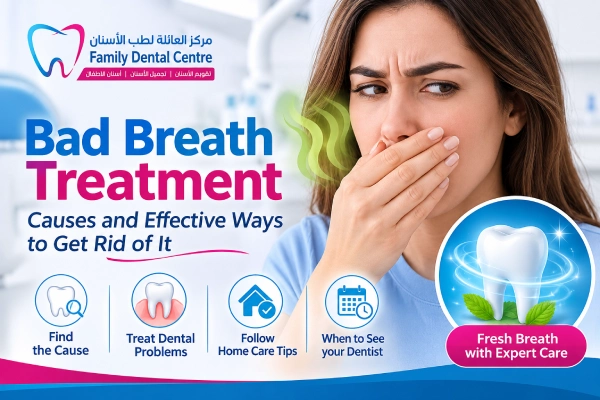
Bad breath, also known as halitosis, can affect confidence and make everyday conversations uncomfortable. While occasional bad breath is common, persistent unpleasant breath may indicate an underlying dental or medical issue. Finding the cause is the first step towards effective bad breath treatment. This guide explains the common causes, professional dental solutions, and daily habits that can help you maintain fresh breath in Oman.
What Causes Bad Breath?
Understanding the causes of bad breath is essential before choosing a treatment. In most cases, the problem starts inside the mouth, where bacteria break down food particles and release unpleasant-smelling gases.
Common causes include:
1. Poor Oral Hygiene
When teeth are not cleaned properly, food particles and bacteria accumulate around the teeth, gums, and tongue. This can lead to plaque formation and unpleasant breath.
Brushing twice daily and cleaning between the teeth help remove the bacteria and debris responsible for many cases of bad breath.
2. Bacteria on the Tongue
The tongue has a textured surface that can trap bacteria, dead cells, and food debris. These substances may produce sulphur compounds with an unpleasant smell.
Cleaning your tongue gently every day can help reduce bacterial buildup and improve breath freshness.
3. Gum Disease
Gingivitis and periodontitis are common dental causes of persistent bad breath. Bacteria accumulate around the gums and in periodontal pockets, producing unpleasant odours.
Other signs may include:
- Bleeding gums during brushing or flossing.
- Red or swollen gums.
- Gum tenderness.
- Persistent unpleasant taste.
- Loose teeth in advanced cases.
- Professional dental cleaning and periodontal treatment may be necessary, depending on the severity of the condition.
4. Tooth Decay and Dental Infections
Cavities, damaged teeth, and dental abscesses can trap food and bacteria, leading to unpleasant breath. Dental infections may also cause pain, swelling, or a bad taste in the mouth.
Treating the underlying dental problem is more effective than simply masking the smell with mouthwash.
5. Dry Mouth
Saliva helps wash away food particles and control oral bacteria. When saliva production decreases, bacteria can accumulate more easily, causing bad breath.
Dry mouth may be associated with:
- Dehydration.
- Sleeping with your mouth open.
- Certain medications.
- Smoking.
- Some medical conditions.
- Drinking enough water and addressing the cause of dryness can help improve symptoms.
6. Food, Smoking, and Lifestyle Habits
Some foods, including garlic, onions, and strongly flavoured spices, can temporarily affect breath. Smoking and tobacco use can also contribute to persistent bad breath, dry mouth, and gum disease.
Reducing tobacco use and maintaining good oral hygiene can make a significant difference.
Mouth, Gums or Somewhere Else? Finding the Source
Although most cases of bad breath originate in the mouth, some cases may be associated with conditions outside the oral cavity.
Bad Breath from the Mouth
Oral causes are the most common. These include:
- Tongue coating.
- Gum disease.
- Tooth decay.
- Food trapped between teeth.
- Poorly cleaned dentures or dental appliances.
- Dry mouth.
A dental examination can help identify these problems and determine the most suitable treatment.
Bad Breath from Stomach: Is It Possible?
Many people assume that persistent bad breath comes from the stomach. However, most cases are related to oral conditions rather than digestive problems.
Certain gastrointestinal conditions may be associated with unpleasant breath, but they are not the usual explanation. For example, gastro-oesophageal reflux disease (GERD) can allow stomach contents to move back towards the throat and mouth, sometimes contributing to an unpleasant taste or smell.
Other possible causes outside the mouth include:
- Tonsil stones.
- Sinus infections and postnasal drip.
- Certain respiratory infections.
- Some metabolic or systemic medical conditions.
If your dentist cannot identify an oral cause, they may recommend medical assessment to investigate other possible sources.
How to Tell If You Have It
It can be difficult to recognise your own bad breath because your sense of smell may become less sensitive to familiar odours.
Some possible signs include:
- A persistent unpleasant taste in your mouth.
- A coated or unusually dry tongue.
- Frequent dry mouth.
- Other people subtly reacting to your breath.
- Bad breath that returns shortly after brushing.
- You can try gently scraping the back of your tongue with a clean spoon and smelling the residue after a few seconds. This is not a reliable diagnostic test, but it may give you an indication.
If you are concerned about persistent bad breath, a dental professional can assess your oral health and help identify the source.
Bad Breath Treatment at the Dental Clinic
The most effective bad breath treatment depends on its underlying cause. A dentist will usually examine your teeth, gums, tongue, and oral tissues before recommending a treatment plan.
1. Professional Teeth Cleaning
Professional scaling and cleaning remove plaque and hardened tartar that cannot be removed through ordinary brushing. This can help reduce bacterial buildup around the teeth and gums.
Your dentist may recommend regular cleaning based on your oral health needs.
2. Treatment for Gum Disease
If gum disease is responsible for bad breath, treatment may involve professional deep cleaning, also known as scaling and root planing.
This procedure removes plaque and tartar from below the gumline and helps reduce inflammation and bacterial accumulation.
More advanced gum disease may require additional periodontal treatment.
3. Treating Tooth Decay and Dental Infections
Cavities should be treated with appropriate restorative procedures, such as dental fillings or crowns, depending on the extent of damage.
If a tooth has an infection, treatment may involve root canal therapy or extraction in certain cases.
Addressing the infection is important because mouthwashes and breath fresheners cannot eliminate its underlying cause.
4. Managing Dry Mouth
If dry mouth contributes to bad breath, your dentist may recommend saliva substitutes, suitable oral moisturising products, or other treatments depending on the cause.
They may also review whether any medications or oral health conditions are contributing to the problem. Do not stop prescribed medication without consulting your doctor.
5. Treating Other Oral Conditions
The dentist may also check for:
- Food trapped around dental restorations.
- Poorly cleaned dentures.
- Dental appliances that collect plaque.
- Tongue coating.
- Tonsil-related symptoms that may require medical referral.
A personalised treatment plan is more effective than relying on a single product to cover up unpleasant breath.
Home Habits That Help
Daily oral care plays an important role in preventing bad breath and maintaining the results of professional treatment.
Brush Your Teeth Twice a Day
Brush for two minutes in the morning and before bedtime using fluoride toothpaste. Pay attention to the gumline and all tooth surfaces.
Clean Between Your Teeth
Use dental floss or interdental brushes daily to remove food particles and plaque from areas that a toothbrush cannot reach.
Clean Your Tongue
Gently clean your tongue once a day using a tongue scraper or a soft toothbrush. Avoid scraping too aggressively, as this may irritate the tongue.
Drink Enough Water
Staying hydrated helps maintain saliva production and reduces the effects of dry mouth. This can be particularly helpful in Oman’s hot climate, where dehydration may contribute to oral dryness.
Use Mouthwash When Appropriate
An antibacterial or therapeutic mouthwash may help reduce oral bacteria and improve breath. However, mouthwash should complement brushing and flossing rather than replace them.
Your dentist can recommend a suitable product based on your needs.
Avoid Smoking and Tobacco
Smoking contributes to unpleasant breath, dry mouth, and gum disease. Quitting tobacco can improve oral health and reduce several causes of persistent bad breath.
Keep Dental Appliances Clean
If you wear dentures, retainers, or other removable appliances, clean them according to your dentist’s instructions. Remove dentures at night if advised and keep them properly cleaned.
When to See Your Dentist
Occasional bad breath after eating certain foods or waking up in the morning is usually temporary. However, you should arrange a dental appointment if:
- Bad breath continues despite brushing and flossing regularly.
- You have bleeding, swollen, or painful gums.
- You notice toothache or signs of dental infection.
- You have a persistent unpleasant taste in your mouth.
- You experience recurring dry mouth.
- You notice loose teeth or changes in your gums.
If bad breath persists despite appropriate dental treatment, your dentist may recommend seeing a doctor to investigate possible sinus, throat, digestive, or other medical causes.
Seek urgent medical or dental care if bad breath occurs alongside significant facial swelling, fever, difficulty swallowing, or difficulty breathing.
Frequently Asked Questions
Why Does My Breath Smell Even After Brushing?
Bad breath can continue after brushing if bacteria remain on the tongue, between the teeth, or below the gumline. Gum disease, tooth decay, dry mouth, and dental infections can also cause persistent unpleasant breath.
If the smell does not improve with regular oral hygiene, visit your dentist to identify the underlying cause.
Does Mouthwash Cure Bad Breath?
Mouthwash can temporarily freshen breath and some therapeutic formulas help reduce oral bacteria. However, it does not necessarily cure the underlying cause of persistent bad breath.
If gum disease, tooth decay, or an infection is responsible, professional dental treatment may be needed.
Is Bad Breath a Sign of a Stomach Problem?
Not usually. Most cases of bad breath originate in the mouth, particularly from tongue bacteria, gum disease, and tooth decay.
However, certain conditions such as acid reflux may contribute to unpleasant breath. If your dentist rules out oral causes, a medical evaluation may help identify other possible explanations.
How Do I Get Rid of Morning Breath?
Morning breath is commonly caused by reduced saliva production during sleep, which allows oral bacteria to accumulate.
You can reduce it by:
- Brushing your teeth before bedtime.
- Cleaning your tongue.
- Flossing daily.
- Drinking enough water.
- Managing nasal congestion if it causes mouth breathing.
If morning breath is unusually strong or continues throughout the day, arrange a dental examination.
Get Professional Advice for Bad Breath Treatment in Oman
Persistent bad breath can affect your confidence, but it is often manageable once the underlying cause is identified.
At Family Dental Centre in Oman, a dental assessment can help determine whether your symptoms are related to gum disease, tooth decay, tongue bacteria, dry mouth, or another oral health concern.
Rather than relying only on breath fresheners, seek professional advice to find a treatment approach that supports long-term oral health and fresher breath.