
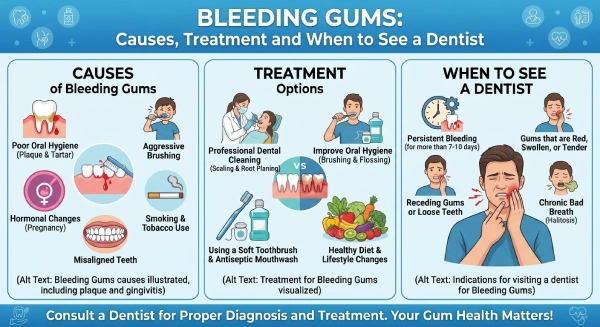
Bleeding gums are a common sign of gum irritation or inflammation, but they should not be ignored. You may notice bleeding when brushing your teeth, flossing, or eating certain foods. In many cases, bleeding gums are associated with plaque buildup and early gum disease. However, persistent or unexplained bleeding may indicate a more serious dental or medical condition.
Understanding the causes of bleeding gums can help you take the right steps to protect your oral health. This guide explains why gums bleed, available treatments, home care habits, and when to visit a dentist at Family Dental Centre in Oman.
What Causes Bleeding Gums?
Bleeding gums usually occur when the gum tissue becomes irritated, inflamed, or damaged. Several factors can contribute to this problem, ranging from inadequate oral hygiene to certain medical conditions.
1. Gingivitis
Gingivitis is one of the most common causes of bleeding gums. It develops when plaque, a sticky layer of bacteria, accumulates around the teeth and along the gumline.
As plaque builds up, the gums may become red, swollen, and sensitive. They may also bleed during brushing or flossing.
The good news is that gingivitis is usually reversible with professional dental cleaning and consistent oral hygiene.
2. Periodontitis
If gingivitis is left untreated, it may progress to periodontitis, a more advanced form of gum disease.
Periodontitis affects the tissues and bone supporting the teeth. Common symptoms include:
- Persistent bleeding gums.
- Gum recession.
- Persistent bad breath.
- Loose teeth.
- Changes in the way teeth fit together when biting.
- Pus around the gums in some cases.
Unlike gingivitis, damage caused by periodontitis cannot always be reversed. Early diagnosis and treatment can help control the condition and prevent further damage.
3. Brushing Too Hard or Using the Wrong Toothbrush
Brushing aggressively or using a hard-bristled toothbrush can irritate the gums and cause bleeding.
A soft-bristled toothbrush and gentle circular movements are generally recommended to clean the teeth without damaging the gum tissue.
4. Poor Oral Hygiene
Infrequent brushing and flossing allow plaque to accumulate around the teeth. Over time, plaque can irritate the gums and increase the risk of inflammation and bleeding.
If plaque hardens into tartar, it cannot be removed through regular brushing alone and may require professional dental cleaning.
5. Hormonal Changes
Hormonal changes during pregnancy, puberty, or other stages of life can make gum tissue more sensitive to plaque.
Pregnancy gingivitis, for example, may cause swollen or bleeding gums even when a person’s oral hygiene habits have not changed significantly.
6. Vitamin Deficiencies and Medical Conditions
Certain nutritional deficiencies and medical conditions may contribute to gum bleeding.
Examples include vitamin C deficiency, vitamin K deficiency, blood clotting disorders, and some blood-related conditions.
Some medications, including anticoagulants, may also increase bleeding. If your gums bleed frequently without an obvious dental cause, consult your dentist or doctor rather than stopping prescribed medication on your own.
Mouth, Gums or Somewhere Else? Finding the Source
Not all bleeding or unpleasant breath comes from the same source. Understanding where the problem starts can help determine the appropriate treatment.
Bleeding gums are usually associated with gum inflammation, plaque buildup, injury, or an underlying health condition. Bad breath, on the other hand, may have several possible causes.
The Connection Between Bleeding Gums and Bad Breath
Gum disease can contribute to persistent bad breath because bacteria accumulate around the teeth and beneath the gumline.
When gum pockets develop, bacteria and trapped food particles may produce unpleasant-smelling compounds. This can cause bad breath even when you brush your teeth regularly.
What Are the Causes of Bad Breath?
The causes of bad breath include:
- Poor oral hygiene.
- Gum disease and dental infections.
- Tooth decay.
- Bacterial buildup on the tongue.
- Dry mouth.
- Smoking.
- Certain foods and drinks.
- Some medical conditions.
- One important point is that bad breath and bleeding gums may occur together, but one does not always cause the other.
Can Bad Breath Come from the Stomach?
People sometimes associate persistent bad breath with digestive problems. However, most cases of bad breath originate in the mouth, particularly from bacteria on the tongue, gum disease, tooth decay, or dry mouth.
In some cases, digestive or other medical conditions may contribute to unpleasant breath. For example, acid reflux can sometimes cause an unpleasant taste or smell.
If your dentist cannot identify an oral cause, you may need to consult a doctor to investigate other possible sources.
How to Tell If You Have Gum Disease
Bleeding gums are one of the early warning signs of gum inflammation, but other symptoms may also appear.
Look for the following signs:
- Gums that bleed during brushing or flossing.
- Red, swollen, or tender gums.
- Persistent bad breath.
- Gum recession that makes teeth look longer.
- Sensitivity around the gumline.
- Pus between the teeth and gums.
- Loose teeth or changes in your bite.
Healthy gums are generally firm and pink, although their natural colour can vary between individuals.
If you experience repeated bleeding, swelling, or persistent bad breath, arrange a dental examination. Gum disease may progress without causing significant pain in its early stages.
Bleeding Gums Treatment at the Dental Clinic
The right treatment for bleeding gums depends on the underlying cause and the severity of the condition.
A dentist will usually examine your teeth and gums, check for plaque and tartar buildup, and assess whether gum pockets or other signs of periodontal disease are present.
1. Professional Dental Cleaning
If bleeding gums are caused by gingivitis or plaque buildup, professional dental cleaning may be recommended.
During the procedure, the dentist or dental hygienist removes plaque and tartar from the tooth surfaces and around the gumline.
This helps reduce gum irritation and allows the gum tissue to recover when combined with proper daily oral hygiene.
2. Scaling and Root Planing
For patients with periodontitis, a deeper cleaning procedure called scaling and root planing may be necessary.
It involves:
- Removing plaque and tartar from below the gumline.
- Cleaning the tooth root surfaces.
- Smoothing the root surfaces to help reduce bacterial accumulation.
Depending on the severity of the condition, treatment may require more than one appointment.
3. Periodontal Treatment
Advanced gum disease may require additional periodontal procedures. The dentist or periodontist will assess the extent of the damage and recommend an appropriate treatment plan.
In some cases, surgical treatment may be needed to manage deep gum pockets or repair damaged supporting tissues.
4. Treating the Underlying Cause
If bleeding gums are related to a medical condition, medication, or nutritional deficiency, treating the underlying problem is also important.
Your dentist may recommend medical evaluation or coordinate care with your doctor when necessary.
Home Habits That Help Prevent Bleeding Gums
Good oral hygiene is essential for preventing gum inflammation and reducing the risk of bleeding gums.
Consider following these daily habits:
Brush Twice a Day
Brush your teeth twice daily using a soft-bristled toothbrush and fluoride toothpaste. Use gentle movements and pay attention to the gumline.
Clean Between Your Teeth
Use dental floss or interdental brushes to remove food particles and plaque from areas that a toothbrush cannot reach.
If your gums bleed when you first start flossing, this may be due to existing inflammation. Continue gently and arrange a dental examination if bleeding persists.
Clean Your Tongue
Bacteria can accumulate on the tongue and contribute to bad breath. Gently cleaning your tongue as part of your daily routine may help reduce bacterial buildup.
Drink Enough Water
Drinking water helps maintain saliva production and reduces dry mouth, which can contribute to unpleasant breath and oral discomfort.
Avoid Smoking
Smoking increases the risk of gum disease and can interfere with the healing process. Quitting smoking is an important step toward improving gum health.
Maintain a Balanced Diet
A balanced diet that includes fruits, vegetables, and sources of essential vitamins supports general health and healthy gum tissue.
Can You Cure Bad Breath Permanently?
There is no single treatment that permanently cures bad breath in every person. The best approach is to identify and treat its underlying cause.
If bad breath is related to gum disease, professional periodontal treatment and consistent oral hygiene may significantly improve it. If it is caused by dry mouth, tooth decay, smoking, or another medical condition, that specific cause needs to be addressed.
When to See Your Dentist
Occasional minor gum bleeding may happen after accidental irritation, but repeated or unexplained bleeding should be evaluated by a dentist.
Book a dental appointment if you notice:
- Bleeding gums that continue for several days.
- Frequent bleeding during brushing or flossing.
- Swollen, painful, or red gums.
- Persistent bad breath.
- Gum recession.
- Pus around the teeth.
- Loose teeth.
Seek urgent medical or dental care if bleeding is heavy, does not stop with gentle pressure, or is accompanied by significant swelling, fever, or other concerning symptoms.
If you also experience unexplained bruising, nosebleeds, or bleeding from other parts of your body, seek medical advice because the cause may not be limited to your gums.
Frequently Asked Questions
Why Do My Gums Bleed When I Brush My Teeth?
Bleeding during brushing is commonly caused by gum inflammation due to plaque buildup. Brushing too hard or using a hard-bristled toothbrush may also irritate the gums. If bleeding happens regularly, arrange a dental examination to identify the cause.
Can Bleeding Gums Go Away on Their Own?
Mild gum irritation may improve when the source of irritation is removed. However, bleeding caused by gingivitis or periodontitis usually requires proper oral hygiene and, in many cases, professional dental treatment. Persistent bleeding should not be ignored.
Why Does My Breath Smell Even After Brushing?
Brushing does not always remove all the bacteria responsible for bad breath. Bacteria may remain on the tongue, between the teeth, or beneath the gumline. Gum disease, tooth decay, and dry mouth can also cause persistent unpleasant breath.
Does Mouthwash Cure Bad Breath?
Mouthwash may temporarily reduce bad breath by masking odours or reducing certain oral bacteria. However, it does not cure underlying problems such as gum disease, tooth decay, or dental infections. The most effective treatment depends on the cause.
Is Bad Breath a Sign of a Stomach Problem?
Not usually. Most cases of bad breath originate in the mouth rather than the stomach. However, conditions such as acid reflux may sometimes contribute to unpleasant breath. If dental causes have been ruled out, a medical evaluation may help identify other possible causes.
How Do I Get Rid of Morning Breath?
Morning breath is commonly caused by reduced saliva production during sleep, which allows bacteria to accumulate in the mouth.
You can help reduce it by:
- Brushing your teeth before bed.
- Cleaning your tongue.
- Flossing daily.
- Drinking enough water.
- Maintaining regular dental check-ups.
If bad breath continues throughout the day despite good oral hygiene, consult your dentist to investigate possible causes.
Can Bleeding Gums Be a Sign of a Serious Health Problem?
Yes, in some cases. Although plaque-related gingivitis is a common cause, persistent or unexplained bleeding may be associated with medication effects, nutritional deficiencies, or blood-related conditions. A dental or medical evaluation can help identify the cause.
Book Your Appointment at Family Dental Centre
Healthy gums are essential for maintaining strong teeth and a healthy smile. If you experience bleeding gums, swelling, or persistent bad breath, early dental assessment can help identify the cause and prevent the condition from becoming more serious.
At Family Dental Centre in Oman, you can discuss your symptoms with the dental team and receive guidance on the appropriate examination and treatment options.
Contact Family Dental Centre to book your appointment and take the next step toward healthier gums.