
Introduction
A beautiful smile is not only about aesthetics—it also reflects strong, healthy teeth that function properly. When teeth are damaged, decayed, or missing, crowns and bridges become essential restorative solutions. These dental treatments help rebuild the structure, strength, and natural appearance of your smile. Whether it’s protecting a weak tooth with a crown or replacing a missing one with a bridge, these procedures combine precision, durability, and artistry. Let’s explore how dental crowns and bridges work, their benefits, and what to expect during the process.
: What Are Crowns and Bridges
: Definition and Purpose of Dental Crowns
A dental crown is a custom-made cap that covers the entire visible part of a tooth. It’s used to restore a tooth that’s been weakened by decay, fracture, or a large filling. Crowns can also enhance the appearance of misshaped or discolored teeth. They are designed to mimic the color, shape, and function of natural teeth, providing both strength and beauty. Crowns are often recommended after root canal treatments, as the treated tooth becomes more fragile and requires protection.
: Definition and Purpose of Dental Bridges
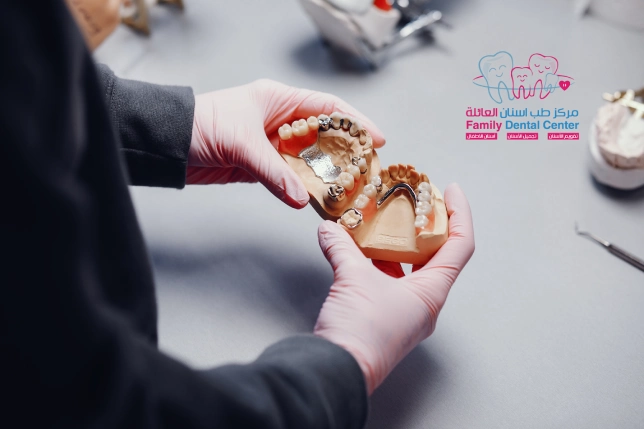
A dental bridge replaces one or more missing teeth by connecting artificial teeth (called pontics) to crowns on the adjacent natural teeth (called abutments). The bridge “bridges” the gap, restoring both the function and appearance of the smile. This treatment prevents neighboring teeth from drifting into the empty space and helps maintain proper bite alignment. Modern bridges are highly aesthetic and can be made entirely from porcelain or zirconia, offering a natural look.A dental bridge replaces one or more missing teeth by connecting artificial teeth (called pontics) to crowns on the adjacent natural teeth (called abutments). The bridge “bridges” the gap, restoring both the function and appearance of the smile. This treatment prevents neighboring teeth from drifting into the empty space and helps maintain proper bite alignment. Modern bridges are highly aesthetic and can be made entirely from porcelain or zirconia, offering a natural look.
Key Differences Between Crowns and Bridges
While both are fixed dental restorations, crowns are used for individual tooth repair, whereas bridges are used for tooth replacement. A crown covers an existing tooth, but a bridge involves at least three units—two supporting crowns and one or more artificial teeth in between. Both are cemented permanently and cannot be removed at home.
When Do You Need Crowns or Bridges
Common Dental Problems Requiring Crowns
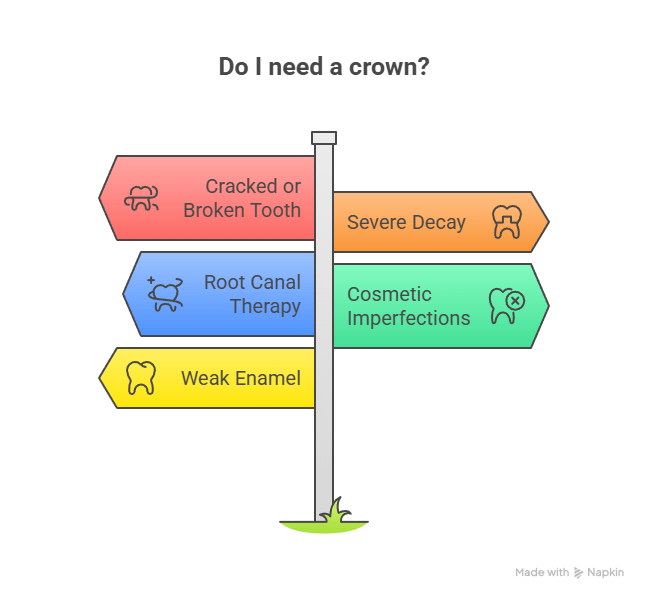
You may need a crown if you have:
- A cracked or broken tooth.
- Severe decay that can’t be restored with a simple filling.
- A tooth that has undergone root canal therapy.
- Cosmetic imperfections such as discoloration or misshaping.
- Weak enamel that risks breaking.
- Crowns provide a long-lasting solution to protect the tooth structure and restore chewing ability.
Situations Where Bridges Are Recommended
Bridges are ideal when you have one or more missing teeth between healthy teeth. They help restore your bite and maintain facial shape, preventing premature aging caused by tooth loss. Bridges are particularly beneficial for patients who cannot or do not want to undergo dental implant surgery.
How Dentists Determine the Right Treatment
Your dentist will assess your oral health, bone strength, and bite alignment. In some cases, a bridge may not be suitable if adjacent teeth are weak; in others, an implant-supported crown may be better. The decision is based on long-term stability and aesthetic goals.
The Procedure – How Crowns and Bridges Are Made
Step-by-Step Process from Preparation to Fitting
- Examination and Planning: The dentist evaluates your tooth structure using X-rays or 3D scans.
- Tooth Preparation: A small amount of enamel is removed to make space for the crown or bridge.
- Impression or Digital Scan and Temporary Restoration: An impression or a Digital Scan of your teeth is taken and a temporary crown or bridge is placed.
- Lab Fabrication: The dental lab designs your permanent restoration using digital or traditional methods.
- Final Placement: The crown or bridge is cemented permanently, adjusted for comfort, and polished.
Materials Used (Porcelain, Zirconia, Metal, PFM)
- Porcelain or Ceramic: Offers the best aesthetic results, ideal for front teeth.
- Zirconia: Extremely strong, biocompatible, and natural-looking—popular in modern dentistry.
- Metal: Known for durability but less aesthetic; often used for molars.
- Porcelain-Fused-to-Metal (PFM): Combines strength and beauty, offering a balanced option.
Digital and 3D Technology in Modern Restorations
Today’s dentistry uses CAD/CAM and 3D printing to design crowns and bridges with unmatched precision. Digital impressions replace messy molds, and same-day restorations are now possible with in-office milling machines. This innovation reduces human error and enhances comfort and accuracy.
Benefits of Crowns and Bridges
Restoring Function and Chewing Ability
Crowns and bridges restore normal chewing, speaking, and biting functions. They distribute pressure evenly, preventing stress on remaining teeth. With proper care, these restorations perform like natural teeth, making eating and smiling effortless again.
Improving Smile Aesthetics and Confidence
These treatments don’t just fix dental issues—they enhance your appearance. High-quality crowns and bridges blend seamlessly with your natural teeth, improving color, shape, and symmetry. Patients often report a major boost in self-esteem after treatment.
Durability and Long-Term Oral Protection
When properly maintained, crowns and bridges can last 10–15 years or longer. They shield teeth from further decay, protect weak enamel, and maintain bite stability. Using advanced materials like zirconia ensures long-lasting results with minimal maintenance.
Potential Risks and Maintenance Tips
Common Complications and How to Prevent Them
Though rare, issues like crown loosening or bridge fracture can occur. Proper oral hygiene and regular check-ups help prevent gum inflammation or decay under the restorations. Avoid chewing on hard foods like ice or nuts that can cause cracks.
Daily Care and Hygiene Recommendations
Brush at least twice daily with fluoride toothpaste and floss using super floss or interdental brushes designed for bridges. Antibacterial mouthwash helps keep the gum line clean and healthy. Regular professional cleanings are essential to extend the life of your restorations.
Longevity and When Replacements Are Needed
Over time, normal wear may cause small gaps between the restoration and gums. If you notice discomfort, discoloration, or sensitivity, consult your dentist. Timely replacement can prevent further damage and maintain aesthetic harmony.
Cost and Insurance Coverage
Average Prices of Crowns and Bridges
The cost varies depending on material and complexity:
- Porcelain crowns: 80 OMR
- Zirconia crowns: 120 OMR
- Dental bridges: varied depends on the material and complexity
Factors Affecting the Total Cost
Key factors include the dentist’s expertise, geographic location, materials used, and whether additional procedures (like root canals or extractions) are required.
Does Dental Insurance Cover Cosmetic Restorations
Most dental insurance plans partially cover crowns and bridges if they are medically necessary (e.g., to restore function). However, if the purpose is purely cosmetic, coverage may be limited. It’s best to check with your insurance provider before treatment.
Conclusion
Crowns and bridges play a crucial role in restoring both function and aesthetics to damaged or missing teeth. They offer long-term durability, protection, and confidence for millions of patients worldwide. With advancements in digital dentistry, treatments are now faster, more comfortable, and natural-looking than ever. Whether you need to protect a weakened tooth or replace a missing one, crowns and bridges provide a proven, reliable solution for a strong, radiant smile.